Home
Logo

David Kohn Architects
Linton House
39–51 Highgate Road
London NW5 1RT

+44 (0)20 7424 8596 tel
Email

Heterotopia

1/11

An agglomeration of architypal found spaces

2/11 An agglomeration of architypal found spaces

An art park

3/11 An art park

Early one morning

4/11 Early one morning

Sectional model

5/11 Sectional model

The vertical space

6/11 The vertical space

Café and house

7/11 Café and house

The lightest timber truss in the world!

8/11 The lightest timber truss in the world!

Flexible gallery space

9/11 Flexible gallery space

Edge of coppice

10/11 Edge of coppice

Roofscape

11/11 Roofscape

Open competition entry, second prize 2008

Arts Council England and RIBA London's open competition, 'Arts' Space of the Future,' invited proposals that questioned what kind of arts' space will be relevant to future generations. How can spaces better reflect the nature of the arts being produced within them? Do art spaces need to be transformed into something quite new?

DKA's prize-winning proposal addressed several pressing issues simultaneously: providing arts spaces in the East Thames gateway, an area currently undergoing large-scale development; creating carbon neutral venues; providing broader access, both physical and intellectual, to arts spaces; seeing these spaces as being as much to do with production and participation as consumption.

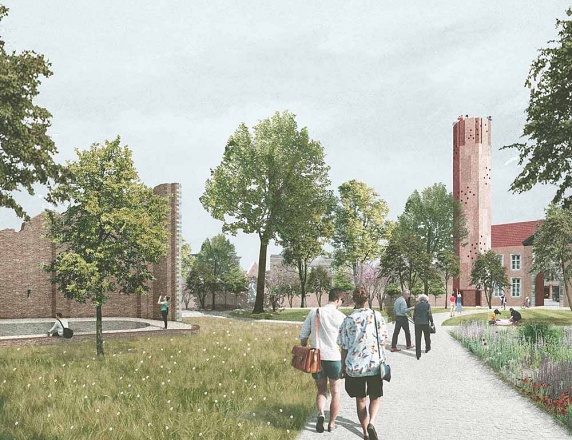
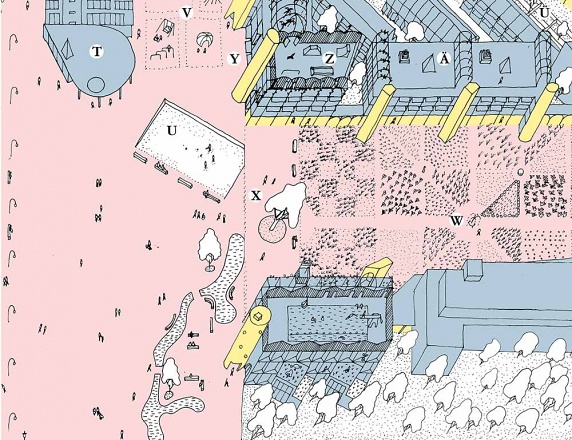
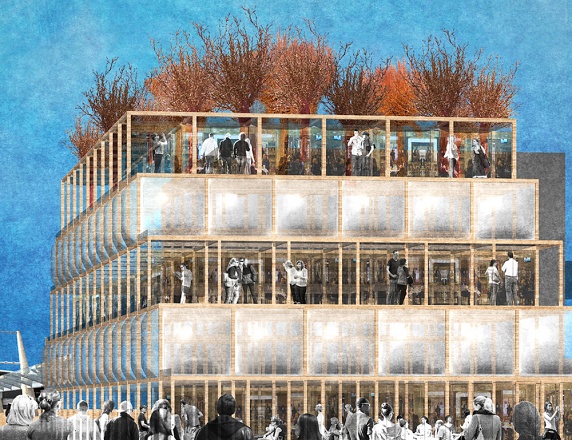
The project took the form of a network of parks in the East Thames Gateway chosen for their tendril-like extension into the surrounding context. Sufficient energy crop, in this case willow coppice, would be planted within the parks to fuel a new arts venue carbon-neutrally. Each year a third of the crop would be cut as crop circles which would become the site of temporary events. Consequently, the whole landscape would become a plastic, changing arts space.

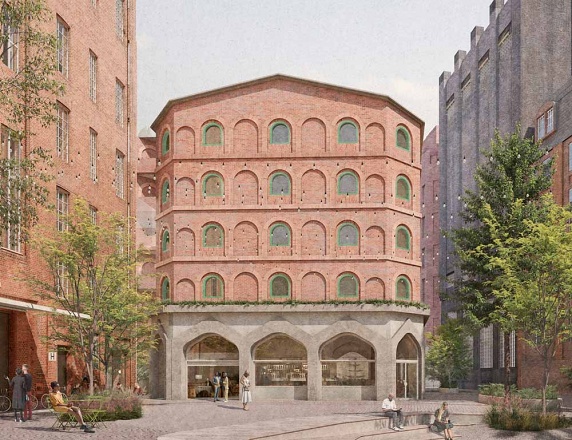
The main venue would act as the power station, burning the willow coppice to supply energy to run the temporary events spaces. Also in the building would be all of the types of space artists choose to work in which are not white cubes: A house, a church, a rotunda, a tower and several gardens. The project was entitled Heterotopia, after Michel Foucault's seminal essay 'Of Other Spaces', in which he described the set of spaces in the world that are, "effectively realized utopia, in which all the real arrangements, all the other real arrangements that can be found within society, are at one and the same time represented, challenged, and overturned: a sort of place that lies outside all places and yet is actually localizable.

Arrow LeftArrow Right